Basilica of Santa Maria del Mar, Barcelona
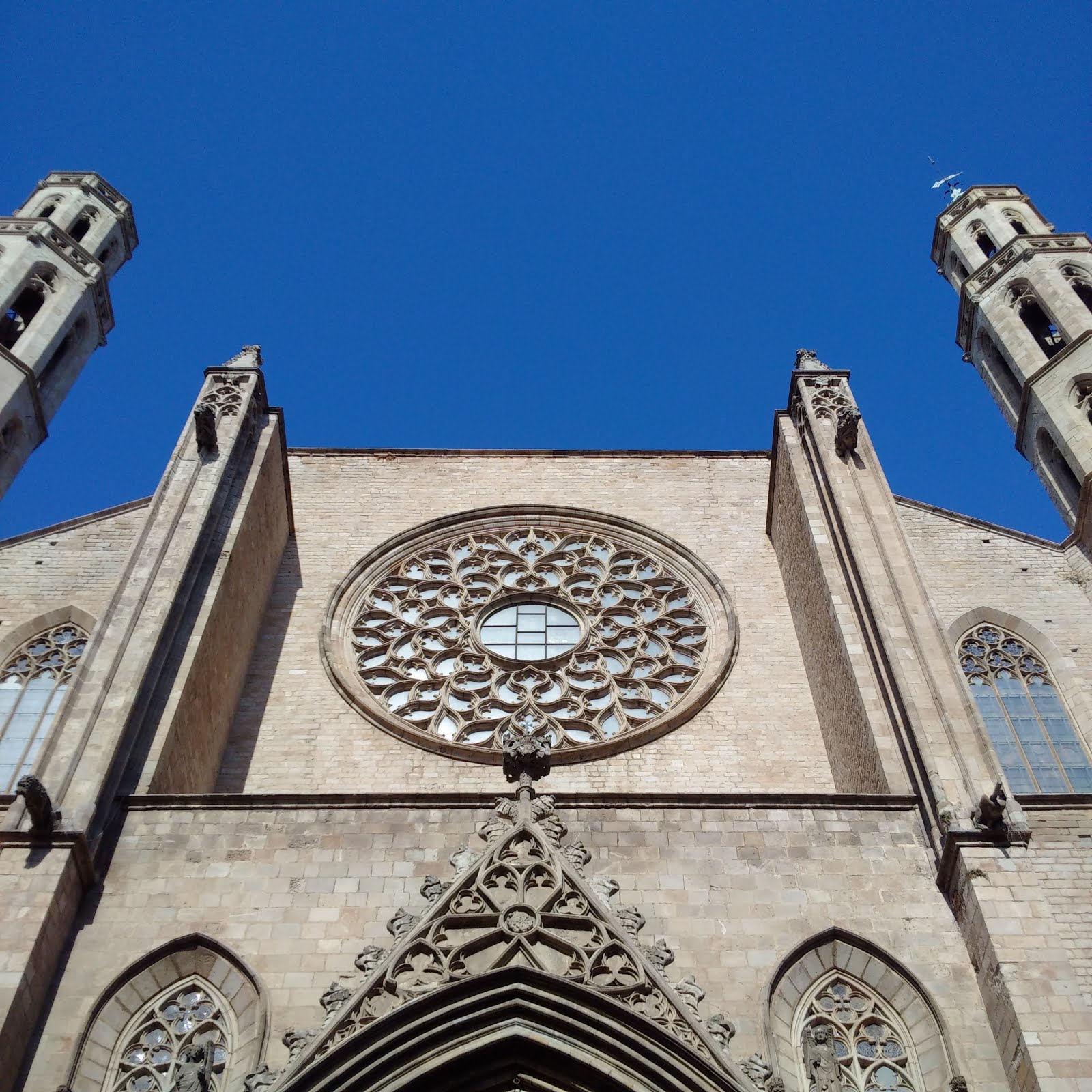
Basilica of Santa Maria del Mar, Barcelona
Tuesday, 18 January 2011
A Gourmet Treat
Chic and stylish my first impressions on arriving at Hakkasan in Bruton Street, Mayfair, central London, felt as if I was entering a smart restaurant on the Bund in Shanghai, China. Since reading AA Gill's enthusiastic and complimentary review just recently in the Sunday Times I was tempted to try this fabulous Chinese restaurant and went for lunch with a dear friend who knows and loves the Far East too. The calming scent of jasmine incense wafting through the air welcomes you and the short walk along dark slate / stone clad walls to the dining area reassures that you've made a good choice. Abundant orchids and wonderfully professional staff complete the scene and as the menus are presented that sense of anticipation sets in. The restaurant decor is elegantly simple and very appealing, especially the atmospheric and spacious basement with wonderful Chinese style wooden screens dividing the space. The menu is seriously tempting but somehow we didn't manage to go beyond the "small eats" wanting to try so many of those and they are ideal for sharing. The salt and pepper squid with a chilli kick, generously filled Shanghai dumplings, delicious crispy duck rolls and dim sum selection were all excellent. The scallop shumai wins my prize for the best dim sum I've ever tried. A glass of 2009 Urban Riesling St.Urbans-Hof Mosel was the perfect accompaniment before progressing to the selection of petits fours I ordered to go with my Oolong blue tea. This was a modern art installation in it's own right - three glass containers stacked on top of each other, containing frozen strawberry granita alongside coffee water ice, on which were nestled two miniature ice cream cones (mango and chocolate), the next layer down offered truffles and the base layer had mouthful size friandises. A decadent treat for a Monday lunchtime and one that will definitely be repeated at the earliest opportunity.

Wednesday, 5 January 2011
Happy New Year!
Following December's festive season celebrated with family and friends the end of the old year and start of the new brings a welcome chance for reflection and positive change. The Winter Solstice is behind us and the northern hemisphere gradually continues the cycle towards the light. An ideal time of year to consider your hopes and dreams as well as take steps toward making them happen. Dark days may seem long but the years are short. One of the Christmas films I enjoyed watching was Mr Magorium's Wonder Emporium starring Dustin Hoffman with the memorable line: "Life is an occasion, rise to it". Certainly impactful it makes you want to be the best that you can be.
So my advice for 2011, which I will endeavour to follow personally, is to open your mind, go somewhere new, try something you've always wanted to do but never have, take a different route on a regular journey, cook a dish you've never tried before, have fun. Appreciate this moment, appreciate this day, relax and be happy.
So my advice for 2011, which I will endeavour to follow personally, is to open your mind, go somewhere new, try something you've always wanted to do but never have, take a different route on a regular journey, cook a dish you've never tried before, have fun. Appreciate this moment, appreciate this day, relax and be happy.
Sunday, 19 December 2010
Orchards in the Oasis
For me Christmas shopping is an indulgent pleasure and inevitably I am tempted to buy things for myself at the same time as carefully selected gifts for my family and friends. My pre-Christmas present this year is the wonderful book "Orchards in the Oasis" Recipes, Travels and Memories by Josceline Dimbleby. Reading this delightful culinary treat you feel as if Josceline is taking you by the hand through the places and food of her life. From an exotic start with the privileged experiences of her Ambassador's childhood, Josceline writes in a very down to earth and engaging way. Her story reminded me of another much smaller but equally charming book: "Apricots on the Nile" a memoir with recipes by Colette Rossant.
Josceline talks about the special bond with her Granny which brought back fond memories of my paternal grandmother who used to make crunchy ginger biscuits with me and peppermint creams which seemed great fun to create in the kitchen. From Josceline's budget driven cooking from her basement flat in London through adventures in Turkey, New York as a new bride (and a favourite delicatessan of mine - Zabar's), Marrakech, India, Burma and Vietnam there are many delicious recipes that are easy to recreate at home. I agree with Josceline that Meat Loaf deserves a revival - her version is definitely one to try, as is her baked cheesecake with a ginger crust and the Iranian smoky aubergine with tomatoes is ideal as an appetiser. Her happy times at Blackberry Cottage in Devon sounded idyllic and I particularly enjoyed her recounting her first class voyage on the Queen Mary.
At the end of her book Josceline writes: "... I realised that it is only when I travel that I start the day with the same feeling of simple excitement that I used to get as a child, my head clear of any mundane worries or responsibilities. To me it is more rejuvenating than anything else, and I hope I can experience a wide variety of places, food, people and surprises for many more years'. I hope you do too Josceline and please write about your adventures for us all to enjoy.
Orchards in the Oasis is a wonderful, very enjoyable book and the perfect festive gift for foodie friends. Merry Christmas!
Josceline talks about the special bond with her Granny which brought back fond memories of my paternal grandmother who used to make crunchy ginger biscuits with me and peppermint creams which seemed great fun to create in the kitchen. From Josceline's budget driven cooking from her basement flat in London through adventures in Turkey, New York as a new bride (and a favourite delicatessan of mine - Zabar's), Marrakech, India, Burma and Vietnam there are many delicious recipes that are easy to recreate at home. I agree with Josceline that Meat Loaf deserves a revival - her version is definitely one to try, as is her baked cheesecake with a ginger crust and the Iranian smoky aubergine with tomatoes is ideal as an appetiser. Her happy times at Blackberry Cottage in Devon sounded idyllic and I particularly enjoyed her recounting her first class voyage on the Queen Mary.
At the end of her book Josceline writes: "... I realised that it is only when I travel that I start the day with the same feeling of simple excitement that I used to get as a child, my head clear of any mundane worries or responsibilities. To me it is more rejuvenating than anything else, and I hope I can experience a wide variety of places, food, people and surprises for many more years'. I hope you do too Josceline and please write about your adventures for us all to enjoy.
Orchards in the Oasis is a wonderful, very enjoyable book and the perfect festive gift for foodie friends. Merry Christmas!
Monday, 29 November 2010
Kitchen Comfort - Pear, Hazelnut and Chocolate Cake
The beauty of a cold and Wintery Sunday afternoon at home is the chance to enjoy taking the time to bake a cake. Filling the house with such a delicious aroma is one of life's simple pleasures that nurtures the soul every time. This weekend I knew exactly what I felt like making - a favourite pear, hazelnut and chocolate cake from a recipe I adapted from one featured in a Good Food magazine supplement saved from ages ago. It's a wonderful combination of flavours that work really well together to produce a fabulously moist and tasty cake that's very moorish. Ideally the easiest and quickest way to make this is in a food processor. If you feel like giving it a go, here's the recipe. First heat the oven to 180 degrees C (fan 160 or Gas 4) and you'll need a 7" or 8" round cake tin lined or greased:
4oz whole hazelnuts
5oz self-raising flour
5oz butter
4oz golden caster sugar
2 large eggs, beaten
2 medium size pears (peeled, cored and chopped)
2oz dark chocolate (chopped into small chunks)
Method:
1. Grind the hazelnuts in the food processor and add the flour, combine
2. Add the butter and pulse until the mixture forms a crumb texture
3. Add the sugar and eggs. Pulse briefly and take the bowl off the base
4. Stir in the prepared pears and chocolate
5. Put mixture into tin, smooth over to make an even surface then bake in the middle of the oven for 50-60 minutes until firm to the touch. Allow to cool in the tin
4oz whole hazelnuts
5oz self-raising flour
5oz butter
4oz golden caster sugar
2 large eggs, beaten
2 medium size pears (peeled, cored and chopped)
2oz dark chocolate (chopped into small chunks)
Method:
1. Grind the hazelnuts in the food processor and add the flour, combine
2. Add the butter and pulse until the mixture forms a crumb texture
3. Add the sugar and eggs. Pulse briefly and take the bowl off the base
4. Stir in the prepared pears and chocolate
5. Put mixture into tin, smooth over to make an even surface then bake in the middle of the oven for 50-60 minutes until firm to the touch. Allow to cool in the tin
Monday, 8 November 2010
Mr & Mrs Smith Hotel Collection South-East Asia
Full of promise and anticipation new travel and cookery books are always tempting to buy, even though I already have a fabulous collection at my finger tips. My latest purchase is the newly launched Mr & Mrs Smith Hotel Collection to South-East Asia, probably my favourite area for travel globally. Although illustrated with some appealing photographs the guide failed to inspire me to the extent I was hoping for. Having travelled extensively in four of the six countries featured in the book lots of my favourite places were missing, some of which would be ideally suited to the chic boutique hotel style so favoured by Mr & Mrs Smith. Perhaps they don't set out to be comprehensive in their reviews but I would caution anyone using this book to do their due diligence and research further afield for more insightful advice to aid planning your travels. Time off is so precious and there's nothing worse than being in a destination only to realise that you would have much preferred to stay at a different property in the same location. Cross-reference with the excellent pocket size Luxe guide series for up to the moment shopping, restaurant and accommodation advice. Also check the mainstream travel guide titles for more in-depth information. I always refer to the fabulous Conde Nast Traveller website too for very reliable and detailed information that always meets my requirements.
I do like the concept of the Mr & Mrs Smith "at a glance" index so if you're particularly interested in choosing somewhere e.g. with a super spa, or gourmet getaway this makes it easier to create a short list - but it would be more efficient if the country was listed next to the property name. In each country chapter the general introduction has some interesting facts, although just provides an overview.
Here are some of my insights and reasons why I wouldn't base my holiday choice on the Mr & Mrs Smith guide alone:
MALAYSIA - Bon Ton
A truly charming small resort of re-constructed antique wooden houses established on the site of an old coconut plantation by a lake full of beautiful water lilies. I look forward to going back for more of the fabulous food and unique surroundings. However, guests ideally need a car if they're keen to explore Langkawi as the property is in the countryside and not on the beach, although the reviewer's description of "white-sand-flanked surroundings" makes it sound more coastal. (Admittedly it's only a few minutes drive away, but the local beach lacks hotel amenities such as sunloungers and shades if that's what you like, plus you need to take your own towels). Next door to Bon Ton is another equally stylish collection of properties by the same owner and a sister location in Penang which deserves a mention. I think Bon Ton is perfect for three nights and then to partner this with staying at a dedicated beach resort such as The Datai on the stunning Andaman coast for a few days, possibly returning to Bon Ton again for a couple of nights before leaving the island. Bon Ton in itself is magical for a short break if you only have a few days to spare, but Langkawi also offers other wonderful locations to enjoy.
CAMBODIA - Siem Reap
Thankfully the Unesco World Heritage protection of the temple complex that everyone throngs to Siem Reap to see means that the unabated development of the town is kept at a distance. I stayed at the De La Paix hotel which was very central and had an excellent restaurant specialising in Khmer cooking, the taster menu for which was a totally delicious dining experience and the highlight to my trip to Cambodia. It's missing from the Mr & Mrs Smith guide but a real gem if you're heading in that direction.
VIETNAM - Hanoi
The Maison d'Hanoi Hanova Hotel in the guide does sound lovely, although I stayed at the grande dame of Hanoi - the Metropole, in the opera wing, which although extravagant was a fabulous indulgence and a great base to explore the city on foot. I mention it on the basis that another of my favourite hotels - the Sukhothai in Bangkok, is reviewed in the Mr & Mrs Smith guide. The Metropole is Hanoi's equivalent. Also, as another benchmark if you like Raffles in Singapore then the Metropole is the place for you.
Hoi An
Definitely worth including in your Vietnam itinerary Hoi An is another Unesco World Heritage protected location and like stepping back in time. There's a wonderful cookery school called Miss Vy's which is not to be missed for any foodie keen to discover the joys of Vietnamese cooking, including a morning visit to the vibrant local market. Although the Nam Hai featured in the guide is super chic and on the beach which is perfect if you're in need of luxurious resort pampering, it's very much a couples type place and particularly expensive. It's also driving distance away from the centre of Hoi An so you'd need a taxi / hotel transport to get there and back. Personally I'd opt for the Life Resort ideally located within the old town of Hoi An and easy walking distance to explore everywhere on foot.
To finish... I realise the Mr & Mrs Smith guide is limited as to how many places they can feature and at the end of the day it's all down to personal choice. The guide series has certainly opened up a much needed niche style to provide recommendations to a discerning audience. In this new addition to the range the section on Thailand is best represented although if you're after spa nirvana you should go to Chiva Som at Hua Hin and that isn't featured. Perhaps I expect too much from a specialist hotel collection book, but essentially I want a reality check as to key features / things to be aware of for each location, a low down on what the beach is truly like e.g. if jelly fish are a problem etc and not just a glossy description.
I do like the concept of the Mr & Mrs Smith "at a glance" index so if you're particularly interested in choosing somewhere e.g. with a super spa, or gourmet getaway this makes it easier to create a short list - but it would be more efficient if the country was listed next to the property name. In each country chapter the general introduction has some interesting facts, although just provides an overview.
Here are some of my insights and reasons why I wouldn't base my holiday choice on the Mr & Mrs Smith guide alone:
MALAYSIA - Bon Ton
A truly charming small resort of re-constructed antique wooden houses established on the site of an old coconut plantation by a lake full of beautiful water lilies. I look forward to going back for more of the fabulous food and unique surroundings. However, guests ideally need a car if they're keen to explore Langkawi as the property is in the countryside and not on the beach, although the reviewer's description of "white-sand-flanked surroundings" makes it sound more coastal. (Admittedly it's only a few minutes drive away, but the local beach lacks hotel amenities such as sunloungers and shades if that's what you like, plus you need to take your own towels). Next door to Bon Ton is another equally stylish collection of properties by the same owner and a sister location in Penang which deserves a mention. I think Bon Ton is perfect for three nights and then to partner this with staying at a dedicated beach resort such as The Datai on the stunning Andaman coast for a few days, possibly returning to Bon Ton again for a couple of nights before leaving the island. Bon Ton in itself is magical for a short break if you only have a few days to spare, but Langkawi also offers other wonderful locations to enjoy.
CAMBODIA - Siem Reap
Thankfully the Unesco World Heritage protection of the temple complex that everyone throngs to Siem Reap to see means that the unabated development of the town is kept at a distance. I stayed at the De La Paix hotel which was very central and had an excellent restaurant specialising in Khmer cooking, the taster menu for which was a totally delicious dining experience and the highlight to my trip to Cambodia. It's missing from the Mr & Mrs Smith guide but a real gem if you're heading in that direction.
VIETNAM - Hanoi
The Maison d'Hanoi Hanova Hotel in the guide does sound lovely, although I stayed at the grande dame of Hanoi - the Metropole, in the opera wing, which although extravagant was a fabulous indulgence and a great base to explore the city on foot. I mention it on the basis that another of my favourite hotels - the Sukhothai in Bangkok, is reviewed in the Mr & Mrs Smith guide. The Metropole is Hanoi's equivalent. Also, as another benchmark if you like Raffles in Singapore then the Metropole is the place for you.
Hoi An
Definitely worth including in your Vietnam itinerary Hoi An is another Unesco World Heritage protected location and like stepping back in time. There's a wonderful cookery school called Miss Vy's which is not to be missed for any foodie keen to discover the joys of Vietnamese cooking, including a morning visit to the vibrant local market. Although the Nam Hai featured in the guide is super chic and on the beach which is perfect if you're in need of luxurious resort pampering, it's very much a couples type place and particularly expensive. It's also driving distance away from the centre of Hoi An so you'd need a taxi / hotel transport to get there and back. Personally I'd opt for the Life Resort ideally located within the old town of Hoi An and easy walking distance to explore everywhere on foot.
To finish... I realise the Mr & Mrs Smith guide is limited as to how many places they can feature and at the end of the day it's all down to personal choice. The guide series has certainly opened up a much needed niche style to provide recommendations to a discerning audience. In this new addition to the range the section on Thailand is best represented although if you're after spa nirvana you should go to Chiva Som at Hua Hin and that isn't featured. Perhaps I expect too much from a specialist hotel collection book, but essentially I want a reality check as to key features / things to be aware of for each location, a low down on what the beach is truly like e.g. if jelly fish are a problem etc and not just a glossy description.
Tuesday, 19 October 2010
Arundel Food Festival October 2010
Arundel's first ever Food Festival is going down a treat and celebrates Arundel's position as the gateway to Britain's newest National Park - the South Downs, as well as being by the sea. A unique combination providing the best of farmland and coast. On Monday 18th October a well attended discussion in the impressive surroundings of the Barons' Hall at Arundel Castle gave food for thought on the topic "Can we eat our way to a sustainable future?" Deftly chaired by Rosemarie Moon, four speakers gave a fascinating and wide ranging insight.
Vicky Johnson, a researcher for Climate Change at the New Economics Foundation, spoke about the global outlook and their "Think and Do Tank" approach combining sustainability, social justice for the environment and economic efficiency. In our inter-connected world we need to understand the impact of action taken and although climate change is the most urgent issue, soil erosion, the state of the oceans, declining fossil fuel (Peak Oil 2012 challenge when demand will exceed supply) and poverty eradication all need to be part of the mix. Nations need to learn to live within their environmental limits. Change is in the air.
Closer to home Caroline Harriott, a third generation local farmer as is her husband, spoke about food production in the Arun Valley. With a strong grasp on reality Caroline had a wonderful and direct approach to the seasonal farming they carry out on the South Downs with total empathy for tradition but with a view firmly in the 21st century. She painted an evocative picture as to how a hundred years ago Arundel used to be a thriving agricultural centre with a weekly livestock market, two slaughter houses and many local traders whose names are still linked with the surrounding fields they used to work (Kemps, Merriotts, Hargreaves). The river was used for transport and there was a strong community spirit. More recently the BSE, Foot & Mouth disease, and Blue Tongue problems have brought their challenges but farming continues successfully. 85% of the new South Downs National Park is farmed, relying on a much smaller, skilled workforce. The use of fertilisers is minimalised, the farmers are encouraged to promote conservation and tourism but as Caroline pointed out they must be allowed to be farmers and not to become park keepers. The monthly Arundel Farmers' Market must be supported and cherished, local shops need everyone living locally to use them and there needs to be a revival in family meal times to ensure a thriving Arundel community can evolve and be strong. As Caroline pointed out you only get out of life what you put in. Great common sense which should be taught in schools.
Toby Quantrill, Head of Public Policy at the Fairtrade Federation then spoke about the global perspective of fairness and justice in the food system - fairness of outcome, fairness of opportunity and fairness of voice (fair say). There were two main points to note. We have power as individuals in the choices we make (to be informed, know where our food comes from) and secondly as a wider economy we can create a sustainable food system. Otherwise bedded inertia will keep things as they are. Globally there is the need to feed more people and redistribute food more effectively. It is technically feasible and likely to happen. The current food system is failing globally as according to research by Oxfam out of the nine billion world population one billion go hungry and one billion are obese. Toby gave some examples of empowering local producers to be part owners (such as Ghanian cocoa farmers) and therefore sharing in the profits of their crops. Ultimately to create a sustainable future we need to share wealth more fairly through the food chain.
Maddy Harland, Editor of Permaculture magazine was an inspiring speaker to conclude, de-mystifying how permaculture is a design system and framework of common sense combining traditional techniques, new technology ideas and green architecture to achieve more ecologically sustainable systems. It takes nature as the model and sets out natural principles to put sustainable systems together. Explaining how Cuba transformed from being oil dependent to being the south American specialists in permaculture was a fascinating case study. On a local basis eating our way to a sustainable future is by us growing things and having a part to play with broadening the range of foods we eat. It's an exciting journey of discovery from planting to harvesting.
The question and answer session generated some good discussion on the need to challenge the power of the supermarkets (with the appointment of a new Government ombudsman); how to reduce our individual amount of food waste; and the need to reduce packaging; through to the need for us to treasure what we have in Arundel, to discover the joy of growing and eating as a community. An inspiring and thought provoking evening.
With an extensive programme running over ten days there is something for all interests in the Arundel Food Festival - from foraging for wild food, vinyard vists, butchery demonstrations and farm tours, to a town walkabout arount the ale and beerhouses of old Arundel. See http://www.arundelfoodfestival.org.uk/ for more details.
As an aside but still food related, Friday 22nd October is the UK's first national nut day...
Vicky Johnson, a researcher for Climate Change at the New Economics Foundation, spoke about the global outlook and their "Think and Do Tank" approach combining sustainability, social justice for the environment and economic efficiency. In our inter-connected world we need to understand the impact of action taken and although climate change is the most urgent issue, soil erosion, the state of the oceans, declining fossil fuel (Peak Oil 2012 challenge when demand will exceed supply) and poverty eradication all need to be part of the mix. Nations need to learn to live within their environmental limits. Change is in the air.
Closer to home Caroline Harriott, a third generation local farmer as is her husband, spoke about food production in the Arun Valley. With a strong grasp on reality Caroline had a wonderful and direct approach to the seasonal farming they carry out on the South Downs with total empathy for tradition but with a view firmly in the 21st century. She painted an evocative picture as to how a hundred years ago Arundel used to be a thriving agricultural centre with a weekly livestock market, two slaughter houses and many local traders whose names are still linked with the surrounding fields they used to work (Kemps, Merriotts, Hargreaves). The river was used for transport and there was a strong community spirit. More recently the BSE, Foot & Mouth disease, and Blue Tongue problems have brought their challenges but farming continues successfully. 85% of the new South Downs National Park is farmed, relying on a much smaller, skilled workforce. The use of fertilisers is minimalised, the farmers are encouraged to promote conservation and tourism but as Caroline pointed out they must be allowed to be farmers and not to become park keepers. The monthly Arundel Farmers' Market must be supported and cherished, local shops need everyone living locally to use them and there needs to be a revival in family meal times to ensure a thriving Arundel community can evolve and be strong. As Caroline pointed out you only get out of life what you put in. Great common sense which should be taught in schools.
Toby Quantrill, Head of Public Policy at the Fairtrade Federation then spoke about the global perspective of fairness and justice in the food system - fairness of outcome, fairness of opportunity and fairness of voice (fair say). There were two main points to note. We have power as individuals in the choices we make (to be informed, know where our food comes from) and secondly as a wider economy we can create a sustainable food system. Otherwise bedded inertia will keep things as they are. Globally there is the need to feed more people and redistribute food more effectively. It is technically feasible and likely to happen. The current food system is failing globally as according to research by Oxfam out of the nine billion world population one billion go hungry and one billion are obese. Toby gave some examples of empowering local producers to be part owners (such as Ghanian cocoa farmers) and therefore sharing in the profits of their crops. Ultimately to create a sustainable future we need to share wealth more fairly through the food chain.
Maddy Harland, Editor of Permaculture magazine was an inspiring speaker to conclude, de-mystifying how permaculture is a design system and framework of common sense combining traditional techniques, new technology ideas and green architecture to achieve more ecologically sustainable systems. It takes nature as the model and sets out natural principles to put sustainable systems together. Explaining how Cuba transformed from being oil dependent to being the south American specialists in permaculture was a fascinating case study. On a local basis eating our way to a sustainable future is by us growing things and having a part to play with broadening the range of foods we eat. It's an exciting journey of discovery from planting to harvesting.
The question and answer session generated some good discussion on the need to challenge the power of the supermarkets (with the appointment of a new Government ombudsman); how to reduce our individual amount of food waste; and the need to reduce packaging; through to the need for us to treasure what we have in Arundel, to discover the joy of growing and eating as a community. An inspiring and thought provoking evening.
With an extensive programme running over ten days there is something for all interests in the Arundel Food Festival - from foraging for wild food, vinyard vists, butchery demonstrations and farm tours, to a town walkabout arount the ale and beerhouses of old Arundel. See http://www.arundelfoodfestival.org.uk/ for more details.
As an aside but still food related, Friday 22nd October is the UK's first national nut day...
Tuesday, 12 October 2010
A Train Runs Through It
With Palma only a two hour flight from London, arriving to blue skies and warm sun was such a tonic having left behind Autumn advancing in the UK. My favourite part of Mallorca is the town of Soller, just half an hour's drive from the airport with the road soon passing almond groves and ancient olive trees. Once a major citrus exporting area with the port sited for ease of access to ship the crops to Barcelona and France, citrus made Soller's inhabitants rich in the late 19th and early 20th centuries. The legacy being some beautiful old mansions dotted around town - one of which has been converted into a wonderful museum and art gallery, well worth a visit (the Can Prunera Museu Modernista).
If your experience of orange juice comes from a carton in the fridge a journey to Soller is a revelation to taste the delicious freshly squeezed "jugo de fruta naranje" using fruit taken straight from the tree. For 2.50 euros it's your own glass of liquid sunshine. Nectar.
Even though Soller is only 30km from Palma, 14km of those used to be via a series of hairpin bends snaking their way over the Tramuntana mountains. The rail line to Palma opened in 1912 and it wasn't until the mid-1990's that a 4km tunnel was opened to make Soller more accessible. Consequently it's an unspoilt gem with a lovely relaxed atmosphere. The original "Ferrocil de Soller" is one of the narrowest guage railways in the world and the traditional trains with their wooden carriages look like something from a children's fairy tale with banquette seating and brass fittings. In Soller the train station has a charm all of it's own and features small permanent exhibitions of Joan Miro's work and Picasso ceramics. The one hour train journey to or from Palma passes through citrus groves with the oranges, grapefruit and lemons in season almost close enough to pick. It's a delightful way to travel to the capital, although once in Soller it's hard to leave. For the best coffee and ensaimadas (light as air buns dusted with icing sugar) go to Cafe Paris on the Placa Constitucio which is the main town square and place to watch the day unfold, especially good on Saturday mornings when the market expands.
The ultimate new taste sensation in Soller has to be the delicious icecreams available from Eiscafe Giovanni, also on the main square. Everything from the mango to the chocolate chip looked seriously tempting. For the purposes of research I only tried three all of which were superb - creamy almond; zingy cherry; and a combination of chocolate, pistachio and marzipan all in one scoop which was seriously divine.
There's much to explore from the port at Soller accessible via a short tram journey, to inspiring walks in the mountains. Hot on my list for next time will be to go to the foodie emporium of Fosh Foods in Palma. I've been intending to go there for ages but once in Soller never seem to want to leave...At least I've brought my own bag of Soller sunshine home with me in the form of huge lemons which will be transformed into luscious lemoncurd, the taste of which will transport me back there until the next time.
Recipe for Lemoncurd (you'll never buy a jar from a shop again once you've tried homemade)
3 or 4 lemons - zested (depending on how strong you'd like the lemon flavour to be)
3 eggs
1 cup white sugar
1 cup fresh lemon juice
4oz (110g) unsalted butter (melted)
In a glass or china bowl whisk the eggs and sugar together until well blended. Stir in the lemon juice, zest and melted butter. You can then either cook the lemoncurd in the bowl over a saucepan of simmering hot water on the stove, stirring occasionally until the mixture thickens - which can take over half an hour, or for a quicker result you can use a microwave oven. With a microwave simply cook on high power for one minute at a time, stirring after each minute until the mixture is thick enough to coat the back of a metal spoon. This process takes around 7 minutes. Just stir well and be careful to ensure there are no lumps in the lemoncurd as you don't want to over cook it. Once ready pour the hot lemoncurd into sterilized jars. Allow to cool and store in the fridge. It will last up to three weeks but doesn't tend to have a chance to.
If your experience of orange juice comes from a carton in the fridge a journey to Soller is a revelation to taste the delicious freshly squeezed "jugo de fruta naranje" using fruit taken straight from the tree. For 2.50 euros it's your own glass of liquid sunshine. Nectar.
Even though Soller is only 30km from Palma, 14km of those used to be via a series of hairpin bends snaking their way over the Tramuntana mountains. The rail line to Palma opened in 1912 and it wasn't until the mid-1990's that a 4km tunnel was opened to make Soller more accessible. Consequently it's an unspoilt gem with a lovely relaxed atmosphere. The original "Ferrocil de Soller" is one of the narrowest guage railways in the world and the traditional trains with their wooden carriages look like something from a children's fairy tale with banquette seating and brass fittings. In Soller the train station has a charm all of it's own and features small permanent exhibitions of Joan Miro's work and Picasso ceramics. The one hour train journey to or from Palma passes through citrus groves with the oranges, grapefruit and lemons in season almost close enough to pick. It's a delightful way to travel to the capital, although once in Soller it's hard to leave. For the best coffee and ensaimadas (light as air buns dusted with icing sugar) go to Cafe Paris on the Placa Constitucio which is the main town square and place to watch the day unfold, especially good on Saturday mornings when the market expands.
The ultimate new taste sensation in Soller has to be the delicious icecreams available from Eiscafe Giovanni, also on the main square. Everything from the mango to the chocolate chip looked seriously tempting. For the purposes of research I only tried three all of which were superb - creamy almond; zingy cherry; and a combination of chocolate, pistachio and marzipan all in one scoop which was seriously divine.
There's much to explore from the port at Soller accessible via a short tram journey, to inspiring walks in the mountains. Hot on my list for next time will be to go to the foodie emporium of Fosh Foods in Palma. I've been intending to go there for ages but once in Soller never seem to want to leave...At least I've brought my own bag of Soller sunshine home with me in the form of huge lemons which will be transformed into luscious lemoncurd, the taste of which will transport me back there until the next time.
Recipe for Lemoncurd (you'll never buy a jar from a shop again once you've tried homemade)
3 or 4 lemons - zested (depending on how strong you'd like the lemon flavour to be)
3 eggs
1 cup white sugar
1 cup fresh lemon juice
4oz (110g) unsalted butter (melted)
In a glass or china bowl whisk the eggs and sugar together until well blended. Stir in the lemon juice, zest and melted butter. You can then either cook the lemoncurd in the bowl over a saucepan of simmering hot water on the stove, stirring occasionally until the mixture thickens - which can take over half an hour, or for a quicker result you can use a microwave oven. With a microwave simply cook on high power for one minute at a time, stirring after each minute until the mixture is thick enough to coat the back of a metal spoon. This process takes around 7 minutes. Just stir well and be careful to ensure there are no lumps in the lemoncurd as you don't want to over cook it. Once ready pour the hot lemoncurd into sterilized jars. Allow to cool and store in the fridge. It will last up to three weeks but doesn't tend to have a chance to.
Subscribe to:
Posts (Atom)